Tuesday, April 14, 2015

Business 2 Employee Digital Services

Interesting saturday early morning bike ride with COOs and Strategy heads of five budding organisations.  They are on the verge of breaking into the big league fighting competition that they chose to avoid so far. Having spent nearly a decade to grow from a startup / revival of an age old defunct organisation - to mid market size - to now, having to confront the big boys, as their size and customer segment now, no longer allows them the luxury of separating themselves as either new kids on the block or as niche players.
The moment, the gorgeous valley at the edge of the cliff, in the early morning light at Khandala stopped being a distraction, the discussions hovered around the issues that have been giving these 5 guys sleepless nights. The intent to chart a new path in this digital age, one that is different from their competition. The desire not to compete with the usual big guys on their terms or home turf but rather traverse a different path ahead, a path which none has conceptualised or had taken before.
This set me thinking. For an enterprise to create the unconceptualised, to chart the uncharted what does it take w.r.t skills, culture and management practises. My view is an organisation that takes business to employee service delivery seriously are the organisations that are best placed to brace the challenges and meet them at a level that is beyond the ordinary. I believe starting at home, is the best model for an organisation to go digital... provide digital business to employee services. Only one of my four friends saw merit in this line of thought. The reason being, the other four started viewing B2E digital services more in terms of capital expenditure towards ipads and iphones and the associated eco-system to sustain it effectively within the enterprise network. Automating payroll MIS and HR services for presence on smartphones! The discussion went in the predictable direction, with Microsoft Surface and wearable computing devices that are now part of healthcare accessory market getting added to the list! This is a very narrow view of B2E digital services. 
An effective digital enterprise, in my view, is an enterprise that delivers digital experiences as a part of Business2Employee services. Only when employees experience life at work, where the eco-system and workplace experiences get digital, only then they would be able to conceptualise new age digital services for their customers. Some level of experiential learning and a digital experience workplace eco-system, will set the tuning of the thought process at a very different frequency. Employees, during non work hours, weekends and holidays ; as regular consumers undergo some very sophisticated digital experiences just by carrying cell phones and tablets along with them. Location based services predominantly dominate this space. However, location is just one attribute. Digital experience tend to add a significant amount of nuisance value to one's life when they become irrelevant to the task at hand or the time of the day or the event one is experiencing does not resonate with experience being delivered. Context and experience need to be in perfect synch for meaningful digital experience manifestation to add value to one's life. This too, once achieved soon tends to assume a nuisance / irrelevant factor when not laced with personalisation of digital experiences powered by learnings from behaviour analytics of users. To achieve this enterprises need to start stepping into the realm of internet of things, making IoT part of corporate IT & digital strategy.
A full profound and effective digital enterprise strategy for business to employee services, should actually not involve capital expenditure on gadgets, gizmos and wearable devices, but rather focus on creating an eco-system that at a very basic level, entertains BYOT not with an view to restrict, but rather fully leverage without impacting either enterprise security or freedom to personal digital lifestyles on personal gadgets. Once this is achieved, a digital enterprise should start delivering context aware services that goes beyond the singular attribute of location.
Creating an eco-system that delivers business to employee digital services is a very significant and defining aspect that forms the foundation of a digital enterprise.  To envision, conceptualise and architect these services as context aware, event driven and event triggered digital experiences; will not just dramatically improve productivity, cut costs over and above the existing automation layers, but also pushes the employees to think around similar context aware digital experiences for their customers.  Without this layer being built, the entire management push towards being a digital enterprise might just end up being a hollow affair.

Thursday, April 9, 2015

Customer Insights Paradox of the Digital Enterprise


Enterprise India is going through the most exciting and disruptive phase it have ever seen so far. Having said that, I concede having such strong similar sentiments in the year 2000 , 2003, 2007, 2010 and in 2012 ! I get excited when a radical new piece of technology erupts on the scene, and then get disappointed when adoption takes its own sweet time, and then get all excited and crazy when adoption accelerates to life changing gear!

Walking down the memory lane, digitization meant conversion of physical records to electronic data format and automation of workflows that were simple rule based tasks. That is what we did as CIOs and IT Heads between 1990 -2002. While most of IT India was making money on Y2K projects and dollar arbitrage (which it still does - dollar arbitrage) , a few corporates in India were discovering the excitement of going online with customer service and sales. One of the banks I worked for back in year 2000, my Chairman insisted in withdrawing money for the ATM and seeing that transaction the very next moment on his internet banking transaction query screen, and on pull based sms mobile banking transaction screen. We took 8 days to make it happen for credit cards, and I was told by my boss then, that my employment with the bank now feels justified!

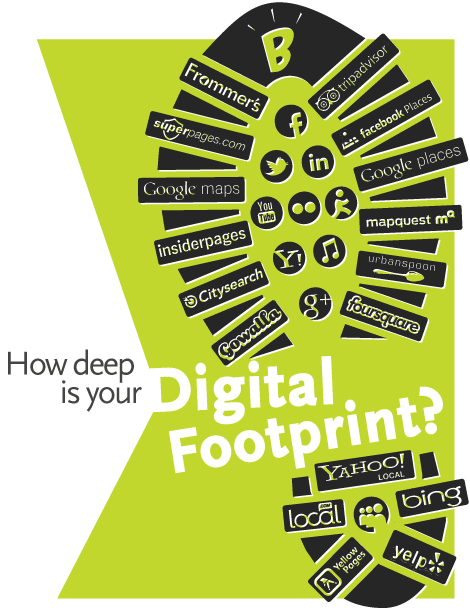
Compare that with about 6 years ago, when you started getting real time alerts, OTP on your smartphone and about 16 months ago that mobile banking apps have been made available with bill payments and internet shopping facilitated with instant merchant payments. Digitization in the yester-years was all about driving efficiency through automated workflows, and in the process enterprises ended up being sole suppliers of technology to customers. Consumerization of IT has put technology directly in the hands of the customers as a lifestyle element, by start-up companies and device manufacturers; with enterprises now playing a catch-up game. Before enterprises could figure out how to participate meaningfully ( some still are) on social networking platforms and in the mobile paradigm, consumer technology has leapfrogged into connected world of internet of things converging rich data and context; leaving behind amazing hidden insights to be discovered through the various digital footprints left by an average consumer, on the grid.  Big Data and unearthing hidden intelligent  insights has now assumed significant importance for a digital enterprise. 

Digital world today consists of 
  • user's digital footprints  across
- connected devices
- social networking and general digital utility platforms that users use either directly or indirectly 

  • technologies that enable one to decipher these footprints for insights
  • enterprise IT plumbing that integrates into this world to loop back the learning's and data into their mainstream customer facing technology 
  • and a whole host of independent apps that serve the customers better than enterprise IT solutions.
When I look at digitization projects with a few enterprises today, mostly financial services world, these are mostly around facilitating easy payments through mobile wallets and mobile devices to leverage the e-commerce boom that is on the surge. Having said that, some of the conversations that I heard during the 1999-2003 era seem to repeat these days - the ones that express anguish about digital space having created a divide between the enterprise and the customer. During the brick and mortar business era, customer relations and hence customer understanding vested with relationship managers, branch tellers, shopping mall attendants and branch managers. Technology was seen as an enabler that would turn this perceived personal asset of front line staff into an enterprise asset. All the CRM systems and online apps have failed to capture this intelligence due to the form filling approach that crept in as a part of this endeavor. Customers were happy to talk about stuff rather than tick check boxes. With consumerization of IT, customers seem less inclined to talk about stuff too. The gap between customer and the enterprise further increases with privacy concerns and the associated laws, as enterprises decide to decipher digital footprints for these insights. In hindsight, the customer touch that existed during brick and mortar era, has now completely vanished and enterprises today seem more far removed from customer insights than before.

Sunday, March 15, 2015

Lessons from Sports


This is a sponsored blog post written for Firstpost.com. To view this same post on FirstPost.com please click on this url http://www.firstpost.com/business/enterprise-learn-cricket-world-cup-2015-2135809.html


There is something that is dramatically different about the Wimbledon championships of the present day  and the currently ongoing Cricket World Cup 2015. Technology is now an inseparable fabric of these events and it has catapulted digitization with the introduction of event driven systems, analytics and visualization technologies. The fact that these events are global in scale and attract massive eyeballs, does put pressure on their content, presentation and production quality. This has resulted in some amazing analytics and some extremely amazing visualization products for display of analytical results, that get presented pre and post the  matches; on television, mobile and portal. I have been a career CIO and my natural instinct is to look for lessons that enterprise IT could learn. 

Event Driven Systems :

Some of the facts leading to the introduction of technology into the game, are remarkably different from enterprise. Unlike the enterprise, were considerable resources of money, time and talent has been spent in designing systems to increase operational efficiency, reporting to calibrate performance against goals and some really sophisticated analytics leading to insights of historical trends;  in sports, technology has been introduced to induce better accuracy into existing manual decision systems.


In most sports, the grey areas that cloud a decision add to the excitement, nervousness and hence the interest in the sport. The madness of excitement and the depths of sorrow that one is subjected to when decisions are taken in unclear situations, is what the sport really thrives on. Such decision keep the sport alive in talk and in memory for multiple years after the event has finished. The game feeds on such decisions. In sharp contrast, enterprise space is less forgiving. Decisions that don’t work out sometimes result in burial of IT systems, vendors and careers. Despite this culture of getting it first time right, technology is yet to penetrate areas that increase decision accuracy or take decisions based on circumstantial evidence. 

To enable technology to take such decisions, event driven architectures that collate data from events, need to be deployed. The DRS implemented both at Wimbledon and in cricket do exactly this. These technologies marry the real with digital. The need for DRS has been created by the hype around controversies that surround the decisions. With DRS in place that map ball trajectory, bounce, speed, direction and with the flashing bails and wickets being used in the currently on world cup, what follows is very rich data that could be analysed in various situations leading to trends, forecasts and predictions. Context associated with the event and all event attributes like ball swing, speed, batter position, stroke played etc are captured and utilised in correlations. This intelligence is used to predict possible future outcomes with various scenarios.

Enterprises capture lots of data but fail to strike correlations and run other statistical models that generate insights around multiple scenarios with context attached. Hence lack of digital resources to belt our relevant predictions has always plagued most enterprises. This result, is that most revenue and business forecasts made by sales heads meets with little challenge in the board room in the absence of scientific predictions and their analysis for probability of success.

Stakeholder Participation :

One thing that the world of sports and the news media is doing now, is ensuring exceptionally effective stakeholder participation and create a well rounded data view on all view points. Comparisons between analyst views, public view, public sentiment and constant calibration of  the event progress with these different view points and opinions, bring a completely different excitement level to the game. Viewers get instantly connected with the buzz that now is no longer limited to their living room or the confines of the sports bar. Technology has plucked each individual out from the confines of their solitude and promptly plugged them into the ever buzzing chatter of the global social fabric – the internet. People tweet as a form of expression letting know the whole world what they thing or are experiencing.

For sports and news media, these people are their stakeholders and customers. Everything they say and do means a lot to these industry domain players. While the India South Africa WC 2015 match was on, different people started to tweet different statistics, views all around.

Enterprises that sell to customers either directly or indirectly have started tracking tweets specially around product and service feedback.  Many companies today are plugged into the information super highway with their ears to the grid and are keenly listening to everything that is being said. However the same as process or format is never pursued when organisations role out changes that impacts their employees. Business to employee services are the most unprofessionally managed services with absolutely no meaningful and effective feedback looped in. One most important lesson that an enterprise can take away from the world of sport is about creating a platform that can engage each and every stakeholder on every initiative.

Data Visualization :


As the event driven systems that digitize physical world activity into data points meets the world of software that effectively co-relates this data and once the platform that engages all the stakeholders is in place, you will need a vehicle that serves this data and collects the reactions and presents them effectively to deliver a complete perspective. Today effective presentation is a tool that goes beyond just representing findings in a manner that is digestible, but rather the larger goals of presentation is to vow and awe the eyeballs to ensure stickiness. Style, slickness and a bit of wackiness in presentation styles, somehow ensure stickiness of eyeballs.

Consumerization of IT has resulted in electronic gadgets and gizmos being bought as lifestyle elements, that connect the consumer to the grid. The small screen real estate and the target device being a lifestyle element, poses a presentation challenge. No one likes to look at simple drab and dull visuals on lifestyle mediums. Even Mahatma Gandhi’s picture gets jazzed up as bit without compromising personality values; when the picture gets featured in Vogue or GQ ! Visualisation that vows at first impression gets eyeball to take interest in a space where content is fiercely competing for consumer attention.

While enterprises presentation goals are about driving the point home, there are multiple initiatives, themes and programs that are stakeholder facing where just making the point might not ensure enrolment and participation. Visualization to make the data & results look appealing to the theme and the initiative at hand; can go an extra mile to ensure enrolment. Why do some people go to Starsports app instead of yahoo sports app or vice-versa to view results of the same match. Data Visualization apart from various types of analytical output that gets belted out, forms an important attribute to consider if eyeball stickiness is the goal.

Summary :

Lessons from the world of sports for enterprise IT are as follows:

  1. Venture out in spaces of customer engagement that bridges the physical world or brick & mortar with digital. Internet of Things is in place today that can get one started on this track at reasonably humble budgets. Content is king!
  2. Collect all data. Correlate, detect patterns, run statistical models, but always attach context with each insight. Enterprise BI initiatives capture insights but forget to tag them with context that prevailed when those results were experienced. Big Data technologies are in place an in SaaS model that prevents this exercise from becoming an expensive affair. Insights are invaluable!
  3. Create a platform to get all round stake holder view and present without prejudice alternate view points that decision/policy makers can either choose to look at or ignore. If you choose to ignore this, one would question the business value of your judgement of not collecting feedback that is being voluntarily given 24X7 about your brand / initiative / product / service / culture / HR policy/…… Perception is reality!
  4. Data visualization in all output is a must. The board members who harp about being presented simple data, all appreciate a good visualization output. The same guys talk about how fantastic the soccer match results and analytics presentation was and have their preference of apps and portals and news channels to go to, based on visualization. This is the age of content competing for consumer attention, so make it look awesome.


Wednesday, October 8, 2014

Better test your systems rather than test your customer's patience!


The Flipkart episode finally got me back into blogging mode. I am sure they must have tested their IT Systems before going into the big sale day. I wonder what tests were done to assess uptime and availability capabilities they carried  for this Mother Of All Events.


I remember way back in 2005 I went to my CEO stating the need to do a stress, endurance and resilience tests before we launched the online trading website. These tests are expensive. I remember the popular vendor in those days in India who had the capability on load runner, pricing services with license cost on the go plus a monopoly premium ! The sales head and the operations head mocked me in the MANCOM saying that IT builds systems that they have little confidence in, and need additional money to validate their creation!  Partly, I agree with them; as in those days; we used to underestimate and under budget the testing processes. Testing was limited to functionality testing and was done by internal users. Availability, uptime and scalability was just a infrastructure sizing problem! 

For a couple of years in the later half of the first decade of 21st century, oversizing infrastructure covered up coding in-efficiencies and database design inefficiencies. With the passage of time, IT teams have started testing application code for scalability issues apart from just security loopholes. I was quiet amazed that in this day and age, Flipkart comes up as a total goofball on this account! 

1) Firstly I doubt if any serious testing was ever done on availability, resilience and endurance. It takes about seven weeks of three iterations and analysis to get anything right , even with the most advanced tools and analysis of results. Every bit of application code needs to be tested for behaviour under loads when you intend to take on a mammoth activity like FlipKart did.

2) Second point. Everyone knows that no one can provide for infinite resources at any given point of time. Sound economic activity like retailing business will not allow massive oversizing for a single day's event. But with IaaS providers, one could have made arrangements for infrastructure to be provisioned on demand...but again don't know if flipkart online shopping application is cloud ready. I guess every e-channel better start getting cloud ready.

3) Third point. Everyone knows that no one can provide infinite resources at any given point in time. If one were to place faith in their business model, and the fact that it will pay off, one could have always drawn a line and declared a finite number of users assured entry on a first come first serve basis and the rest could queue up for entry. One could have played a bit with the pricing model as well.

Point is availability of service in the online world is not an IT problem alone. Business will need to come up with sales strategies and pricing models and footfall management to work within the cost structures to maximise profits on these massive sales festivals.


I am however amazed at the lack of adequate preparedness by Flipkart before they put their brand on the chopping block!

Sunday, May 26, 2013

Social Networks & Big Data - Testing business hypothesis On the Cloud


Business innovation reflects in the form of new products and services, re-engineered / revamped business processes, new delivery mechanisms and sometimes a very different engagement model. One common factor that defines the mood of teams who role out these innovations, is the fear of unknown. Most innovations ( as opposed to changes) typically dabble in the paradigm of rolling out the untested and the unproved with absolutely no clue around how the end consumers might react. Enterprises typically follow a prototype and pilot model before a Big Bang roll-out to counter most these issues. Some forward looking organizations have adventured tools such as market predictions to gauge the reaction of people to new concepts ( could be a new product or a new HR policy) with the employees (employees are end consumers too).

To gauge reactions to a concept post ideation, one needs participants who are willing to put their mind to it and react. We need a platform that can capture these reactions and tools to analyse these reactions. Social networking sites provide this platform and the needed digital footfall , big data technology helps analyse the reactions. Business hypothesis can be tested on social networking sites to take a call on how well the assumptions measure up.

At the CIO round table on the evening of the first day of TechEd 2013 in Bangalore, one of the CIOs brought this point up and we were wondering, where do the Microsoft's products stand on Big Data. To begin with Apache Hadoop is made available as a service called HDInsight on Azure Cloud. What this means is that VMs on Azure cloud support full functionality of HDFS and MPP execution of MapReduce. HDInsight service also has ODBC connectors to enable analysts and BI professional leverage the simplicity of usage of Excel and the power of analytics + reporting now available in MS Sql. As far as I know, this is possible for structured data. To use unstructured data, PigLatin scripts will need to be run on the VMs. One can get visualisation of results going in excel ( from what I gather - I have not tried this or seen this as a demo yet). If this works out fine, one could potentially use Excel, to analyse the end results with the power of dissecting information that excel so very well provides. I am definitively sure excel empowering users to fire  HIVE queries  from it's interface.

There were slides shown pointing to Pig, Hive, Flume, Pegasus, Sqoop and Mahout  implementations provided for on the HDInsight services on Windows Azure. This however needs to be tested for ease of usage and the actual power this implementation puts in the hands of the analyst and the business users. Microsoft has enriched HDInsights service with the ability to control accesses and privileges using Active Directory. For enterprises that use active directory, this wheel needs no reinvention for Big Data setup, if done on Azure.  HDInsight does not dilute any of Apache Hadoop capabilities ( hence running as a Azure service you get the same high availability and reliability) with the HDInsight clusters managed thru System Center 2012.

HDInsights service on Azure cloud, with the simplicity of integrating enterprise data warehouses and data marts with unstructured data in HDFS and with the simplicity of using excel and other in-house BI tools to query and visualise results; enables enterprises to empower their business users to start testing their hypothesis and make better informed choices and increase the probability of success on their innovations.


Monday, May 20, 2013

Mobile Architectures


Enterprise applications follow certain architecture guidelines to deliver the business needs on functionality, TCO and ROI. To achieve this, trade offs made often tend to sacrifice asynchrony and flexibility in favour of assembly-lining of processes to deliver maximum bang for the buck spent and IT security. Large enterprise applications work on the philosophy of FTR ( getting things first time right). Efficiency, effectiveness and cost-control are derived from FTR theme. Any incremental and/or dramatic changes to the systems are mellowed down against the need to keep things familiar, avoid employees going thru a learning curve. Hence most changes are never dramatic, on a floor shop where most processes are simplified and assembly-lined. The pressure to avoid drastic changes is high in order to keep re-learning cycles low (to realize efficiencies from changes faster and at lower cost). In such environments, you would find IT systems architected in a fabric of synchrony when it comes to processes and events. In such environments you will find human resources avoiding the complexity of multi-tasking on mutually exclusive process threads.

Architectures for mobile apps need to deliver on different goals. These goals being asynchrony, multi-tasking and usability. Events arranged in a tight sequence will not work in the real world as the real world is a very different place when compared to the controlled environment of back-office and enterprise shop floors. This is true for sales processes as well. If you really look at the retail sales processes and the events as they unfold on the ground, they are seldom in tandem with the way the processes in the systems have sequenced events, implemented controls and designed the processes. This is one of the many reasons for change requests budgets and exceptions being sought for on mandated process. This is one of the reasons why systems have the facility to request for exceptions and an approval authority workflow for their approval.


When I look at some of the mobile apps from the enterprise that are either customer facing or sales force facing, I have found these apps tightly stitched from an enterprise operations viewpoint, backend to the front. While in reality the mobile app needs to be de-linked from the enterprise backend to avoid the trap of synchrony and the trap of irrelevance between sequence of event play-out in the real world (there are no fixed sequences here) and the fixed sequence of processes manifested thru screens and logic on enterprise applications. How often have people got into BPR exercise initiated as and when these gaps are experienced at a medium to high frequency.

Cloud plays a big role in delivering asynchrony and de-linking from backend to keep the app behaviour relevant to the way events play out in the real world. Windows Azure Mobile services provides some fantastic platforms on the cloud to make this happen.


As an approach the mobile developers should focus on usability and architect the app to handle each fundamental unit event in entirety without stitching the code to create dependency on another event's initiation and/ or closure. Enterprise IT need to provide for multiple entry points for data from mobile apps into  processes on the backend systems, without imposing the synchrony that is inherently built into the backend systems. For those who believe that this is an expensive change to make on the backend, it could be and again it may not, if one leverages the cloud queues and service bus to hold the data till all the pieces fall in place for a backend process to consume the data. This will require constant polling from enterprise network to the cloud / a mechanism for the cloud to let the enterprise network know that data is ready to be consumed.


The mobile app, writes to the cloud. Depending on the need, this could be a table (no-sql table) , cache, queue or a service bus. Build the processing logic on the cloud and not on the mobile app itself. On the cloud you would have two roles. A web role, typically the web app executes in a web role and a worker role which typically are cloud resources such as cache, queues and tables which the web app uses. The mobile app is stitched for usability to cater to various events as they play out in the real world. The processing happens on the cloud. The backend systems consume the data to process and give an output back to the cloud. The mobile app takes this output from the cloud to display on the mobile screen and wait for consumers next request, rather than initiating the next sequence for the consumer.


In the traditional development approach, a developer would sit down to create table structures and database schemas , normalise the database design, design screens, write processing logic to read and write data, logic for integration points with the enterprise database and so on. In the new normal, the developer will just focus on UI design, use Azure no-sql tables to store data. The Azure tables, create the structure depending on incoming data. The processing logic is held on the cloud as a web app in a web role. Session data persistence is managed by azure cache. If one needs to capture images or videos ( surveyor capturing data for car insurance claim processing), this can be held on the cloud CDN. Interaction with enterprise systems (for synchronous processing) can happen thru the service bus on a publish/subscribe model.

For example while shopping in a real world brick and mortar store, as I see what I like, I could take my mobile out, invoke the store's mobile app, read the bar code off the merchandise on display, attach credit card from my m-wallet and leave a delivery address and walk out. While different stores will have their own respective mobile apps, the bank could just publish a web app on the cloud, cloud storage (no-sql table) to which different apps could write credit card data, create three different themes on the service bus :
- Shopping Item theme
- Payment Approval Theme
- Item delivery theme
..and publish/subscribe to these themes depending on the context of the transaction. The store app would publish item details and price to the first theme, the bank could subscribe to it for it's records. The bank would publish credit card authorization decision to the service bus , to which apps could subscribe to. As the item is delivered to the customer, the enterprise apps of the stores could publish these details for the bank's systems to subscribe (in case there is a dispute later). The enterprise systems could have web services for interaction with the service bus on the cloud and the web app on the cloud.

Its clear from my above explanation that the app developer can create magic while being completely ignorant of the underlying enterprise systems that come into play. The developer need not worry about database design and structure and can focus only on UI and logic. The enterprise IT teams re-use the existing processing and business logic on the system by directing the data from the cloud into the right systems thru a SOA layer, they build and manage. Welcome to the new normal.


written for:


Monday, May 6, 2013

A Social Network for Enterprise Applications


Put together a few day-dreamers, high skilled innocent techies who can be taken on a fantasy ride, some chilled beer and the beautiful spring evening of Pune city; what you end up with is a crazy concept and a design document written on tissue papers and thick-paper coasters, for the wackiest  and unimplementable idea one could ever come up with. If only one could get some venture capitalist or seed funders on the same table; the next one year could be a well funded sabbatical for most of us around that table. Two fantastic experiences I still savour in from last evening. The build-up of the wacky concept and the associated technical design document (if you can call it that) and the green tea with fresh ginger to end the night!

The big idea - a social network for enterprise applications. A space where different applications on heterogeneous platforms, from different enterprises could reach out to each other on a need basis or otherwise, to befriend one another, share and exchange both data and intelligence for mutual benefit and in a secure manner without violating privacy laws. The applications decide their privacy settings and create trust groups with trust levels of various degrees. I guess by now you guys would have gauged the height and depth of lunacy that prevailed around that table. I state again, there was just beer on the table, nothing else!

Straight thru collaboration between enterprises has always been looked at as a fictional idea. Enterprise IT Policies, data governance mandates and zero tolerance towards alien incoming traffic into enterprise network have prevented straight through collaboration. Management will power always gave way to the logistic nightmare of establishing trust relationships between enterprise networks, working thru the mindsets of enterprise IT teams, enterprise risk teams and IT auditors. Cloud and particularly Azure services seem to have unknowingly offer a solution in this space.

Some of the elements needed for straight thru collaboration between enterprises for consumer's benefit :

  1. Authenticating consumers , employees and partners for the scope of the collaboration in focus.
  2. Persisting session data across multiple systems belonging to different enterprises and  enabling these systems to access this data. 
  3. Persisting Master Data of the consumer to be accessed by collaborating enterprises,  their respective processing partners and the consumer himself, subjected to data access rules of these organizations.
  4. Data transformation outside of enterprise networks as needed by enterprise apps, partner apps and consumer's personal apps enabling these systems to understand the data against the backdrop of diversity in codification of master data and other data items. 
  5. A very effective 2 phase commit of transactions across collaborative systems, one that is non-intrusive.

There are a lot more demands that STC ( straight through collaboration) will place, so the list if not truly a complete representation of all the challenges that would need to be met.

Azure services such as :
  • Identity (AD on the cloud)
  • Caching (App Caching and content caching on the cloud)
  • Business Analytics ( BI and Hadoop Services)
  • Messaging services ( Queues and Service bus on the cloud)
  • Data Services ( Sql Db, Tables and Blobs on the cloud)
can be meaningfully stitched together into a solution around the scope of collaborative services enterprises want to offer to their consumer. As enterprises start authenticating with the Aadhaar framework, ability to collaborating on a non-intrusive mode will get a further boost. I hope enterprises see merit in authenticating not just consumers but all actors needed to get collaboration going, being authenticated by credible third party services.

Ability to transform data, run transactions to their logical end with asynchrony as a key element of the collaboration fabric, with 2 phase commit as the final goal across collaborating systems, would have been impossible without Azure messaging services ( queues and service bus on the cloud).

Azure business analytics services that unlocks enterprise intelligence to empower it further with big data outputs, will add the winning elements of context, timing and relevance to the collaboration services being delivered to the cloud. Getting these three elements right for a single large enterprise is itself a complex activity, getting it right across multiple collaborating partners is a near impossible task without the ability to transform and interpret data on the cloud. This is the reason why we need multiple services as bullet-ed above to be stitched together into a solution. 

The other issue that crops up is that enterprises would not like to remain wedded to it's partners to get STC going for delivering value to the end consumer. The collaboration arrangements could run out of relevance with passage of time , sometimes under 3 hours ( example: credit card companies wanting to collaborate for discounts with in-mall merchants for 2 hours). We need a framework where enterprises could negotiate online the terms and conditions of collaboration, do an online hand shake and get the collaboration going. This is very similar to the scenario where we allow apps to connect to our facebook profile, accept friends invitations on facebook and keep tuning our privacy settings and keep categorizing our friends to get a meaningful discussion / collaboration going. A similar framework will need to be evolved for enterprises to hook-on and hook-off with each other for various transactions that need collaboration between their systems,  their partners systems and consumer's personal apps and devices. A social network for enterprise applications!

What started as a fun fantasy discussion, quickly spiraled into some serious paper napkin drawings of architecture design and some specifications bullet-ed down behind a few thick paper coasters   We were not completely insane, so there were some assumptions that were made. We assumed systems would be intelligent enough to decide whom to befriend and decide on the degree of trust they would like to establish with the system seeking to connect. We decided to tackle the implement-ability of such a scenario on a later date, and focus for now on other issues to get this concept moving forward! 

I need to mention here why I picked Azure. The way Microsoft is approaching the cloud computing paradigm, empowering it with platform services that enterprises need, putting in frameworks for extending these to mobile clients and keeping an open mind on heterogeneity of personal devices and strong preferences of the enterprises to have the flexibility of the cloud with the comfort of implementing their corporate policies. Most of Azure services could literally be an extension of on-premise digital assets as enterprises evolve their view around the right model of governance , security and  management for leveraging the power of the cloud.


written for :

Followers

Google analytics